
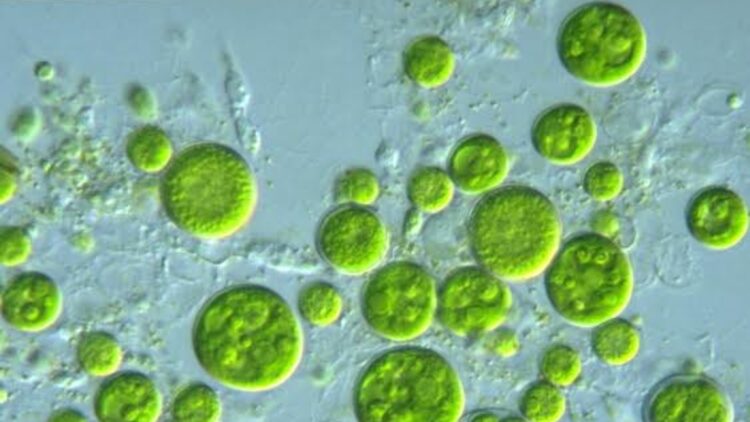
We all know to a greater or lesser extent about the process of photosynthesis. It is thanks to it that the oxygen we breathe is produced, and it captures carbon dioxide, which helps to mitigate climate change. The award for the most photosynthetic organism goes to the microbe Prochlorococcus, a cyanobacterium found in and around the tropics, where the waters are warmer. It can be found even in places where other organisms cannot survive, as stated by oceanographer from the University of Washington, François Ribalet.
Initially, scientists believed that this organism, which thrives in warm temperatures, would adapt to the increasing temperatures of the oceans. However, studies conducted indicate otherwise. This scenario could pave the way for another group of cyanobacteria present in the tropics and subtropics, Synechococcus. These may better withstand the consequences of global warming, but they require more nutrients. According to the study, Prochlorococcus will not disappear, but its habitat will change.
Photosynthesis
Photosynthesis is the biochemical process through which plants, algae, and some bacteria convert sunlight, carbon dioxide, and water into food and oxygen, which they release into the environment. Carbon dioxide is absorbed through the stomata in the leaves, and water is absorbed by the roots. It is the most important process in nature, as it is essential for life to exist on Earth.
Prochlorococcus
Some have come to consider this microorganism as responsible for the functioning of the planet. It is a genus of marine cyanobacteria, belonging to the picophotic photosynthetic plankton. It is the most photosynthetic organism on the planet, so its conservation is vital, as it produces almost a third of the planet’s oxygen production. 75% of surface waters contain its presence, especially in and around the tropics. They are also characterized by being well adapted to regions where the water temperature is rather warm, and for being able to survive with scarce nutrients.
Prochlorococcus is in jeopardy
Although it has always been thought that these microorganisms are capable of adapting to high temperatures, recent studies show that this may not be the case. According to the lead author of the study and oceanographer from the University of Washington, François Ribalet, “For a long time, scientists thought that Prochlorococcus would have a bright future, but in the warmer regions, they are not doing so well, which means there will be less carbon – less food – for the rest of the marine food web”.
The temperature range in which it lives comfortably is between 19-22 degrees Celsius (66-82 degrees Fahrenheit), but due to global warming caused by the burning of fossil fuels, the oceans are likely to exceed those temperatures.
A revealing study
Ribalet conducted a study in which 800 billion cells were sampled over 90 trips during 13 years. They were able to determine that “Their exhaustion temperature is much lower than we thought”. Furthermore, both Prochlorococcus and other bacteria have had to adapt to different circumstances, leading to modifications in their gene response to stress, which could be the cause of their resistance to rising temperatures.
Synechococcus
Synechococcus is another group of cyanobacteria that shares location with Prochlorococcus in the tropics and subtropics. According to Ribalet, “If Synechococcus takes over, it is not a fact that other organisms will be able to interact with it in the same way they have interacted with Prochlorococcus for millions of years.” It is expected that, as the study indicates, the productivity of Prochlorococcus will decrease by 17% in the low tropics and by 10% globally. As Ribalet points out, “Its geographical range will expand towards the poles, north and south. They will not disappear, but their habitat will change”.