
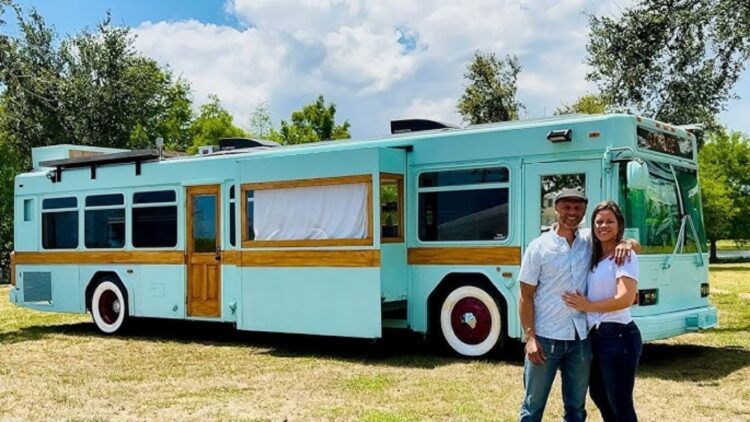
It seems that both in the United States and Canada, the camper van movement has fallen behind, giving way to the “Skoolie” phenomenon. Have you ever heard of it? This new concept refers to the conversion of old school buses into giant homes on wheels. It is a full-fledged upcycling process, as it involves giving a second life to a vehicle that is no longer suitable for transporting students.
Although at first it may seem like a good idea, the truth is that patience is necessary, as it is a long process that includes insulation work, plumbing, carpentry, approval, and the installation of electricity with solar energy, among many other things. Some examples of the most well-known models in the Skoolie community are Bumpin Bus, Trebventure, SkoolieStays, or Queen Beep.
In addition to being an alternative to traditional housing, the skoolie movement is also known for being leaders in sustainability, incorporating solar panels, composting systems, and reclaimed materials. Some examples of this are Bluenose Bus, The Hive Drive, or Fern The Bus. These homes on wheels have also become worthy examples for true interior designers such as Bicoastal Bus, The Mayes Team, or Live Simply Buses.
Skoolie movement
While van conversion remains the trend in Europe, in Alaska and the United States there is a new movement: the skoolie movement. This new trend involves giving a second life to retired school buses, which, after they are no longer used to transport students, are transformed in a true case of upcycling into a hybrid between a motorhome and a mini cabin, with great design potential. Each house-on-wheels project is unique, but the motivation is common: to have autonomy and freedom while also enjoying sufficient space.
How much time and money does converting a school bus into a camper require?
The cheapest part of the whole process is the initial investment, as these types of vehicles can be found for prices between $4,500 and $7,500. However, renovation budgets can rise to $40,000-$46,000, reaching up to $93,000 if professional labor is involved. The average size of this type of vehicle is 20–30 m² of surface area in buses of 10–12 meters, an amount unattainable for almost any van. In addition to the financial investment, one must consider activities such as cleaning, refurbishing, emptying, insulation, electricity, plumbing, carpentry, and certification, which can require between 5 and 14 months to complete.
Looking for inspiration?
The skoolie community features as many designs as there are people. Each vehicle reflects the personality of its owners, and some of the most well-known examples are:
- Bumpin Bus.
- Trebventure.
- Skoolie Stays.
- The Queen Beep.
Another characteristic of this type of vehicle is their commitment to sustainability, incorporating solar panels, composting systems, and reclaimed materials. They are a clear example of how it is possible to combine ecology, comfort, and convenience. Some examples are:
- Bluenose Bus.
- The Hive Drive.
- Fern the Bus.
For some, these vehicles are the perfect opportunity to showcase all their potential and skills in interior decoration and design. Some of the most well-known examples are:
- Bicoastal Bus.
- The Mayes Team.
- Live Simply Buses.
Requirements to keep in mind
One of the requirements for this type of aggressive vehicles is the need to certify them, which can be quite a tedious process. However, if you are forewarned, it will simply be a bureaucratic procedure that precedes a life on wheels, full of freedom and autonomy.