
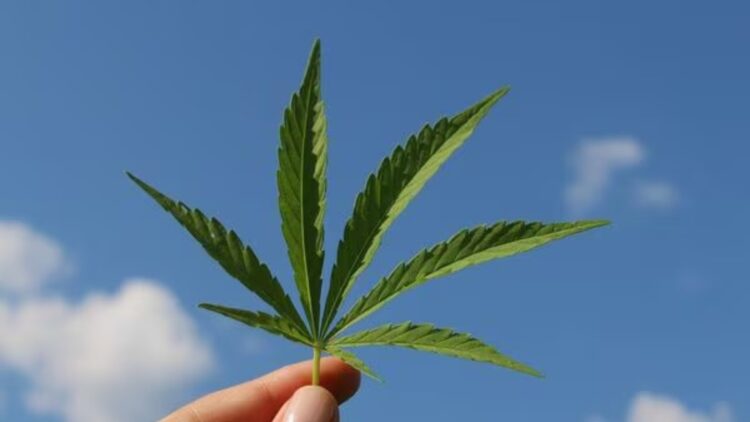
The United States Congress is facing pressure from the Consumer Brands Association (CBA), made up of major companies such as Coca-Cola, Nestlé, and Kraft Heinz, to ban intoxicating hemp products (such as Delta-8 and Delta-10 THC). This pressure arises from a “legal loophole” in the 2018 Farm Bill that allowed the sale of these products without FDA oversight. The CBA seeks to achieve a total ban led by Representative Andy Harris (R-MD), citing safety risks and consumer confusion. This move has sparked a political battle, with Senator Mitch McConnell (R-KY) in favor of the ban, and Senator Rand Paul (R-KY) fighting to protect the hemp industry, even threatening to “withhold large-scale spending legislation” to prevent the ban.
“Hemp legal loophole”
The Consumer Brands Association (CBA), made up of companies such as Nestlé, Coca-Cola, and Kraft Heinz, sent a letter to the United States Congress last September demanding the closure of what they call the “hemp legal loophole” created by the 2018 Farm Bill. This law, which was passed in order to legalize hemp, did not provide for its use in creating THC isomers, such as Delta-8 and Delta-10, which are highly intoxicating.
Reports published by Cannabis Aire quote the CBA as stating that these products have caused “significant research and testing challenges, as well as unseen impacts on health and safety”. This definition did not take into account the possibility of adding various THC isomers (chemical variants with similar effects), and the possibility of intoxicating hemp-derived beverages, which can include more THC than expected. Moreover, many products are deliberately marketed in ways that confuse consumers, with bright-colored packaging, cartoon images, and names that mimic popular candies or treats”.
In the new letter, it explains that “Congress did not intend to create an unregulated market for intoxicating products that are not subject to FDA oversight. Two of the most prevalent THC isomers, Delta-8 and Delta-10, have not undergone any review by the FDA. These products pose risks to consumers who may falsely believe they are reviewed and regulated for safety and purity. As you consider the completion of credits for fiscal year 2026, we encourage you to close this loophole and protect consumers”.
Who else supports this request?
A bipartisan coalition of 39 state and territorial attorneys general also recently asked Congress for a clear federal definition in order to regulate and prevent the sale of these products. Minnesota Attorney General Keith Ellison (D), who helped lead that letter last month, had to defend his position amid criticism, as his state has a regulated hemp market. Major industry associations in the alcohol sector have also joined the coalition, calling on Congress for a ban, at least temporarily, until a “robust regulatory framework” is established.
What is the debate?
Currently, the discussion is being led by Senators Mitch McConnell (R-KY) and Rand Paul (R-KY). McConnell was the one who pushed for the federal legalization of hemp in 2018, but now he argues that it should be completely banned. For his part, Paul argues that a total ban “would devastate the industry.” “Some of them came back from states that have fully legalized marijuana, and they’re going to ban hemp? I mean, it’s just ridiculous.” He concludes: “So they prefer people to use a much higher dose of THC from cannabis than lower-dose hemp products. It makes no sense,” he stated.
Instead, Gail proposed the Hemp Economic Mobilization Plan (HEMP), which aims to triple the concentration of THC that hemp could legally contain while introducing regulations to ensure that the hemp industry is not affected.