
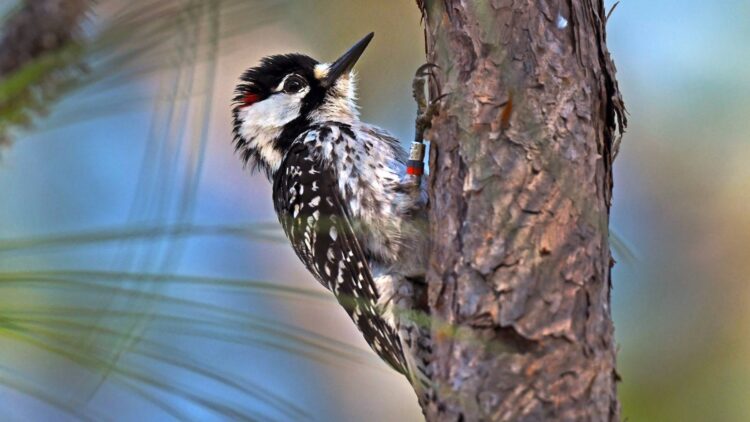
Nature seems to have given us a second chance, returning the red-cockaded woodpecker to one of its natural habitats, Peachtree Rock, a nature reserve in Columbia, South Carolina. Native to the southeastern United States, including Georgia, it has been over 50 years since this species became extinct in the area due to massive tree cutting, which left them homeless. According to the IUCN Red List, 28% of bird species are at risk of extinction, with high chances of disappearing in the next 25 years. The director of Conservation Nature in South Carolina, Dale Threatt-Taylor, stated that these are the best results that can be achieved in a biodiversity conservation report.
Peachtree Rock
Located in the Peachtree Rock Heritage Preserve in South Carolina, United States, it is a sandstone rock formation known for its inverted peach tree shape. It is a 305-acre preservation area and hosts the only natural waterfall in the coastal plain of South Carolina, as well as a large number of marine fossils. Another of its features is the biodiversity that resides there, with a great variety of plants such as Rayner’s blueberry, and animals like northern red salamanders.
The red-cockaded woodpecker
The red-headed woodpecker, whose scientific name is picoides borealis, is a small bird, approximately 7 inches long, with striped white and black plumage, white cheeks, and a distinctive red crest in males. It is not easy to spot, and is characterized by digging cavities in trees such as pine. This species is endemic to the southeastern United States, including Georgia and South Carolina. Its existence is in danger due to massive deforestation, which leaves them without habitat, causing them to migrate or become extinct.
The red-cockaded woodpecker came back home
After 50 years, no specimens of this species have been sighted in Peachtree Rock, which is why the International Union for Conservation of Nature considers it a threatened species. However, after the latest environmental conservation report for the area, the director of Conservation Nature in South Carolina, Dale Threatt-Taylor, stated that the red woodpecker is back in Peachtree Rock, “Having a threatened species returning to an area for the first time in almost 50 years is the best rating you can get in its conservation report”.
What happened to this birds?
Both the woodpecker and many other birds in the area saw their habitat disappear due to the massive logging of trees. This caused their extinction and migration from the area, so their return home is quite a discovery. 28% of all evaluated species, which number more than 47,000 different species, are on the IUCN Red List, as they are considered endangered species. According to experts, if nothing is done about it, within 25 years, many of them will have disappeared.
Protection of biodiversity
The conservation of biodiversity by humans is essential for the preservation of species, both flora and fauna. There are many conservation teams working worldwide to prevent the extinction of many species, such as the case of the gray wolves in Colorado or the elephant seals in Chile. The University of Oxford conducted a meta-analysis in which the cause-effect relationship between conservation efforts undertaken by different action groups was measured, and it was concluded that “conservation efforts, including habitat preservation and control of invasive species, ‘improved the state of biodiversity or slowed its decline in most cases (66%) … [and] were generally very effective”.
The return home of the red woodpecker gives hopes to researchers and conservation teams, reinforcing their effort and demonstrating its usefulness. “Nature can do incredible things when we give it the right tools,” said Threatt-Taylor.