
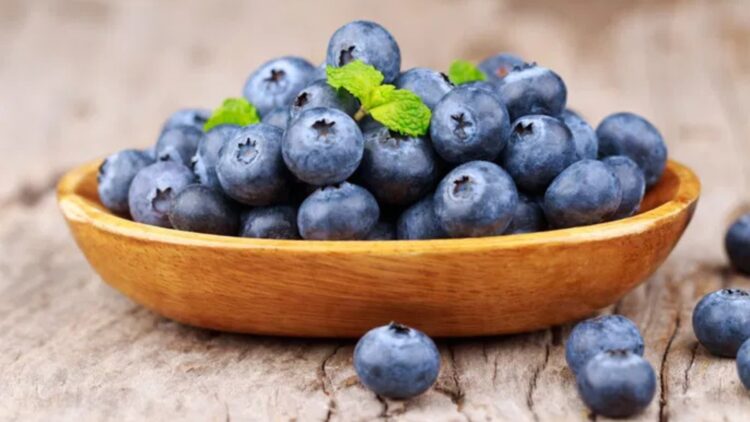
Did you know that blueberries are one of the most widely consumed fruits in the United States? And it makes sense, as they are one of the most delicious fruits, but unfortunately, they are also one of the most contaminated and have the highest pesticide levels, according to data from the Environmental Working Group (EWG). Each year, the EWG’s Dirty Dozen list ranks conventionally grown fruits and vegetables with the highest pesticide residues. For the second year in a row, blueberries have made the list, this time ranking 11th.
What is worrying about blueberry consumption is not that it has increased since 2000, but that the amount of contamination they contain has also increased. Data from the United States Department of Agriculture (USDA) show this increase, with the presence of two specific substances: phosmet and malathion. These are insecticides that have a direct effect on the human nervous system and pose a danger to children’s health and during pregnancy.
The most worrying thing is that these pesticides have already been banned and restricted by the European Union, but the U.S. Environmental Protection Agency (EPA) continues to allow them. In this situation, it is important not to panic. If you eat blueberries, you don’t have to stop doing so, simply incorporate better cleaning practices for the fruit and vegetables that go into your refrigerator before being eaten, and if possible, choose retailers that are as natural as possible.
Blueberries
Blueberries, one of the most widely consumed fruits in the United States, are small berries, dark blue to black in color, that grow on shrubs of the Vaccinium genus. They are one of the fruits with the highest amount of antioxidants, fiber, and vitamins, making them the perfect ally for boosting the immune system and lowering blood pressure. You can choose the way you like to eat them best: fresh, frozen, in smoothies, desserts, or even salads.
Blueberry consumption in the US
Blueberries are one of Americans’ favorite fruits, but according to data from the Environmental Working Group (EWG), they are also among the fruits with the highest levels of pesticide and pesticide residues. How does this affect vulnerable groups such as children and pregnant women, and the health of other groups?
Does it pose a health risk?
The EWG TM’s Dirty Dozen 2024 ranks the fruits and vegetables with the highest levels of pesticide residues each year. For the second consecutive year, blueberries have made the list, this time ranking 11th. The problem is not that consumption has skyrocketed since 2000, but that it has increased along with the presence of pesticides. This is demonstrated by data from studies conducted by the United States Department of Agriculture (USDA), which are chilling.
The studies were based on samples taken between 2020 and 2022, which show the presence of pesticides in 90% of the total. This is a clear increase from the 81% found in 2014. In addition, more than 80% of the samples contained two or more pesticides, reaching up to 17. This is another substantial increase from the 13 found in previous tests.
Fosmet and malathion
These are two of the most dangerous chemicals detected in the study. Both are organophosphate insecticides, meaning they have a direct effect on the human nervous system. Fosmet accounts for 12% of the total, and malathion for 10%. The most worrying aspect of this situation is that these substances have been banned by the European Union, but are still permitted for use by the U.S. Environmental Protection Agency.
What can be done about it?
If you are a regular consumer of blueberries, don’t panic! While it is true that ingesting these toxins is not good for your health, we can find a solution. It is important to thoroughly clean the fruit once you get home. It is not enough to just wash it with cold water; you should also use white vinegar or baking soda to ensure that you remove any traces of chemicals that may be on the fruit.