
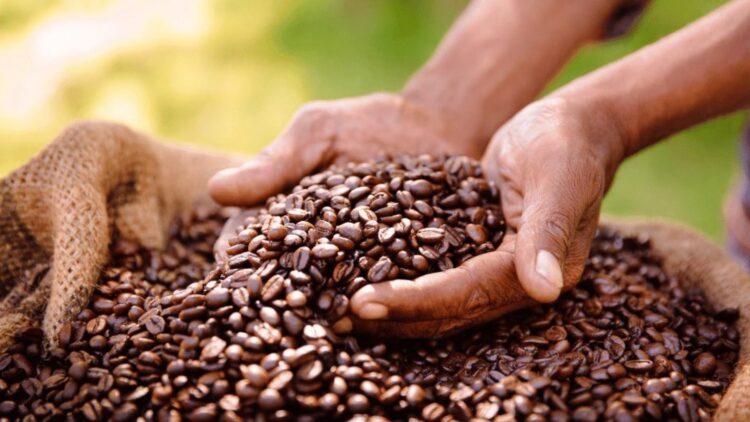
Researchers at RMIT University in Australia are working on the creation of a concrete cement based on coffee waste, with the aim of reducing the amount of waste and reducing the impact on climate change. Rajeev Roychand, an engineer at the university, has spoken out about the serious problem generated by the disposal of waste and its emission of greenhouse gases. In the same way, Jie Li explains the need to resort to alternative materials, since the extraction of sand as a construction material produces a great and negative impact on the environment.
That is why the researchers have opted for the use of organic coffee waste as a potential material to replace cement in construction work. After a process of pyrolyzing the coffee waste, they have obtained a material they have called biochar. At the moment, according to Shannon Kilmartin Lynch, the study is in its early stages, but it offers positive data that could reduce the amount of waste that ends up in the landfill.
Waste generated by the coffee industry
Have you ever wondered how much coffee is produced worldwide? Do you know if this production process is environmentally friendly, or how much waste it generates? The data that answers these questions, especially regarding the amount of waste, is devastating. Every year 176.2 million bags of coffee are produced, coming from different parts of the world such as Colombia, Vietnam, Brazil or Indonesia. As a consequence, 10,000 million kilograms (22,000 million pounds) of coffee waste are generated, which end up in landfills without having a second life.
The problem is not only the accumulation of this waste, but also the consequences of its disposal. Rajeev Roychand, an engineer at RMIT University, explained, “The disposal of organic waste poses an environmental challenge as it emits large amounts of greenhouse gases, including methane and carbon dioxide, which contribute to climate change”. This is posing a serious problem because the global construction sector is growing, and so is the demand for concrete, the production of which also has harmful consequences for the environment.
Construction materials production
The construction sector seems to be booming, so the demand for materials needed to carry out production is increasing. Why is this considered a problem? Easy. Because the extraction and production of materials such as concrete cement is not particularly environmentally friendly, which has unpleasant consequences. According to RMIT engineer Cie Li, “The continuous extraction of natural sand around the world – typically mined from riverbeds and banks – to meet the rapidly growing demands of the construction industry has a major impact on the environment.”
This is why this group of engineers and researchers have proposed the need to find alternative materials whose production does not generate such a large amount of emissions into the atmosphere. In this situation, Li adds, “Maintaining a sustainable supply of sand poses critical and long-lasting challenges due to the finite nature of the resource and the environmental effects of sand mining. With a circular economy approach, we could keep organic waste out of landfills and also better preserve our natural resources such as sand”.
Use of coffee waste
This is how the idea of making use of the waste generated by coffee production arose, with the intention of reducing its final destination in landfills. In order to make use of it, it is necessary to submit it to a pyrolyzation process, through which it is heated to 350ºC, causing the decomposition of its molecules and giving rise to a porous carbon rich in carbon. The researchers called it biochar, which can be added directly to concrete without changing its strength.
The team said they are still in the early stages of the project, but the data are encouraging. They have yet to test the coffee-cement hybrid in more hostile circumstances to evaluate its strength. Shannon Kilmartin-Lynch explained that “Our research is in the early stages, but these exciting findings offer an innovative way to significantly reduce the amount of organic waste going to landfill”.