
Currently, the geopolitical situation in the world is at a quite delicate point, especially in countries like the United States. The war in Ukraine, the genocide in Gaza, and now the detection of Russian attack drones against Poland are setting off all the alarms. In recent years, the decisions made by heads of state like Vladimir Putin or Donald Trump have raised concerns among geopolitical experts. The results of surveys from the Scowcroft Center for Strategy and Security and the 2025 Global Foresight from the Atlantic Council reveal that, in both cases, nearly 70% foresee that military scenarios involving Russia or China as protagonists could occur in the next decade.
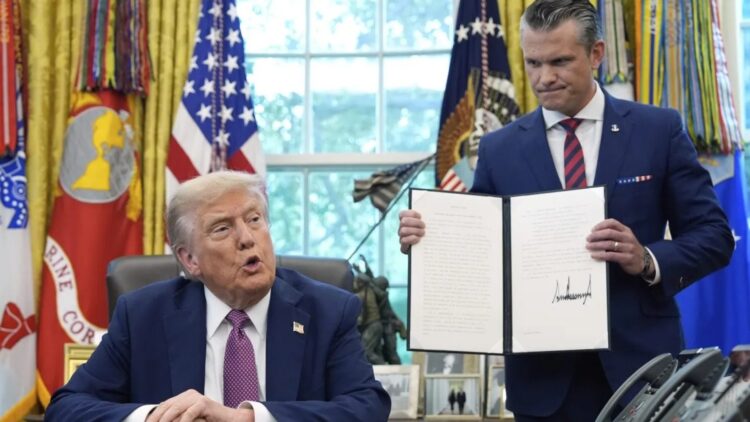
In light of all this unrest, Trump has renamed the Department of Defense to the Department of War, and in the event of reaching an armed conflict, he would proceed to recruit his citizens to fight at the front. As dictated by the Congress of the United States, all men in the country are required to register for the Selective Service upon turning 18, and therefore, are obligated to respond to the call if the country goes to war.
If the Selective Service System were activated, male citizens, residents, and immigrants would have to answer the call and would be subjected to ‘the lottery.’ After a random draw of birthdays and numbers, the ‘fortunate’ would have to report to a local Military Entrance Processing Station (MEPS), where the bureaucracy would come into play, allowing them to request a waiver or appeal, or to complete their recruitment process.
Global geopolitical situation
One of the sensations that I believe we all have, regardless of the country we are from, is that it seems like at any moment, everything is going to blow up. The war in Ukraine, the genocide in Gaza, and now the Russian drone attacks against Poland, a NATO member, are raising tensions across the planet. After the activation of Article 4, the world is waiting to see the reaction of the United States. Geopolitical experts have analyzed and predict that military scenarios involving China or Russia could arise in the next decade, as shown by 70% of responses in the Scowcroft Center for Strategy and Security 2025 Global Foresight survey by the Atlantic Council.
What would be the next step for the United States?
The data from the conducted surveys shows how a global conflict between the great powers is expected. Some leaned towards a nuclear war while others favored a similar conflict in space. As an unencouraging gesture, Trump has changed the name of the Department of Defense to the Department of War. It is important to remember that, by law, all men in the country are required to register for the Selective Service System once they turn 18.
What happens if they do not do it?
Federal law states that males, whether residents or immigrants, have a period of 30 days to register with the Selective Service System. This period can be extended up to the age of 26, but failing to do so would constitute a crime. The consequences for this are:
- $250,000 and/or five years imprisonment.
- Ineligible for state-based student loans and grant programs in 31 states.
- Ineligible for federal job training under the Workforce Innovation and Opportunity Act (formerly Workforce Investment Act).
- Ineligible for federal (and many state and local) jobs.
- Up to a 5-year delay of U.S. citizenship proceedings for immigrants.
What would happen in the event of a national emergency?
First of all, it would be necessary for Congress to amend the Selective Service Act, as noted by the newspaper AS, to authorize the President to recruit personnel into the Armed Forces. The Selective Service System would then be activated, and active duty and retired military would have to report for service. Thirdly, the process of ‘the lottery’ would take place. A random draw based on birthdays and numbers, broadcast live on television.
When the draw is finished, the ‘lucky’ ones receive the order to report to a local Military Entrance Processing Station (MEPS). Upon receiving the notification, those affected can begin the claim process or even apply for an exemption. If they do not qualify for an exemption, the recruits would undergo a physical, mental, and moral evaluation that will determine their eligibility for military service. If so, they would be recruited and if not, they would be sent back home.