
Despite Trump’s ability to read the needs and the sense of frustration of a large part of the American population, which led him to victory over Kamala Harris, the truth is that so far in his term, he has only managed to increase inflation and hurt his own economy with the tariff war. He has brought the American economy to a point where even he has been forced to take a step back, lowering tariffs on products such as coffee, meat, or avocado, as stated by Georgetown University professor and researcher at the Elcano Royal Institute, Federico Steinberg.
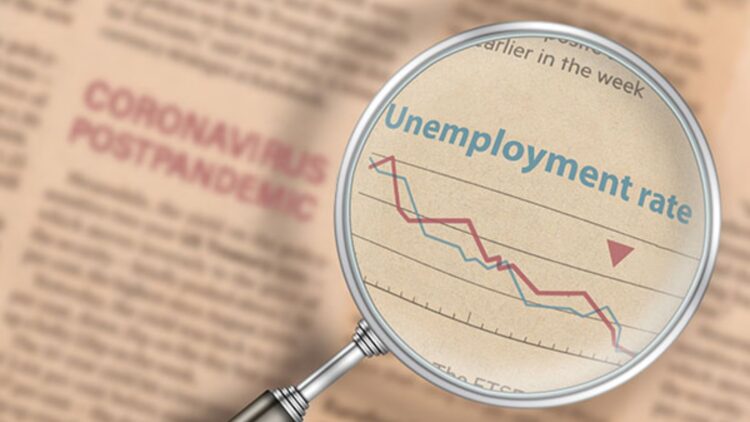
On the other hand, the senior economist at the Center for Economic and Policy Research (CEPR), Dean Baker, has also referred to the concept of affordability and the effect that tariffs have had in preventing the Federal Reserve from lowering interest rates. He explains that the issue of affordability has directly affected the growth of real wages and job creation. Meanwhile, the Economics professor at the City University of New York, Marta Bengoa, also mentions the total unemployment data, which rose from 4.3% in August to 4.4% in September.
Bengoa explains that the impact of tariffs becomes visible in the manufacturing sector, inflation, and in unemployment and wage inequality. Steinberg introduces the terms Vibecession and Key, shared economy, explaining that the technology sector is the one on the rise, but questioning whether there is a bubble related to data centers and artificial intelligence.
Delicate situation of the economy in the United States
Experts refer to three terms when talking about the United States economy: affordability, vibecession, and key shaped economy. The first, affordability, relates to Trump’s ability to read the sentiment of frustration, especially among impoverished workers, whose votes helped him achieve a victory over Kamala Harris. Despite his promise not to leave anyone behind, the truth is that a year after that electoral victory, the U.S. economy is in a more precarious situation. This situation has even contributed to the Democratic victories in the mayor’s office of New York and in the states of Virginia and New Jersey.
According to Federico Steinberg, Professor at Georgetown University and researcher at the Elcano Royal Institute, “Inflation is accelerating rapidly because tariffs are inflationary. So much so that Trump has had to lower tariffs on coffee, avocados, bananas, and meat, because the outlook was becoming really concerning”. He also adds, “The feeling that the labor market is weak, that people are increasingly dissatisfied due to affordability, with rent prices—which in the U.S. you have to add childcare and health insurance costs to—but GDP growth is still around 2%, which is not a bad figure”.
Meanwhile, Dean Baker, senior economist at the Center for Economic and Policy Research (CEPR), explains that “Inflation has increased. It had been declining and probably would have been at the Federal Reserve’s 2% target, or very close to it, if it weren’t for the tariffs. Instead, it is now around 3%. It is not a catastrophe, but it makes it difficult for the Federal Reserve, which meets this Wednesday, to lower interest rates as the economy weakens.”
“The issue of affordability,” says Baker, “mainly refers to the halving of real wage growth, especially for lower-wage workers. There are also factors that are not accounted for in our inflation measurements, such as the end of the pandemic moratorium on student loan payments”.
What is happening with the labor market?
According to the Professor of Economics at City University of New York, Marta Bengoa, “[…]Regarding GDP, the economy contracted by 0.3% in the first quarter of 2025 (the first contraction since mid-2022), partly due to uncertainty over tariffs and disruptions in supply chains. However, the OECD has revised its growth forecast for 2025 upward to 2% (from 1.6% in June). […] In August, only 22,000 jobs were added and in September 119,000. Unemployment rose to 4.3% in August and 4.4% in September”.
Baker also adds that “It has clearly weakened. Last year, 170,000 jobs were created per month. The average for the last four months up to September has been only 40,000, most of them in the healthcare sector […] Private sector data indicate that October and November are likely to be worse, with employment growth possibly having turned negative”.
Effect of inflation and tariffs
According to Bengoa, “the negative impact of tariffs is evident in three areas”: the manufacturing sector, the actions of the Federal Reserve, and the labor market and wage inequality.
In this scenario, Steinberg proposes the following: “Vibecession translates to ‘recession-like feeling’ even if the objective data don’t show it; and the other concept is key-shaped economy, or a K. Why? Because it either does very well if you’re in the tech sector, or poorly if you’re in traditional sectors. […] the million-dollar question is whether there is a stock market bubble, in relation to data centers and Artificial Intelligence”.
“If AI falls,” Steinberg reflects, “it is a problem, but there is no real estate investment related to it. […] What optimists promise is that investment in AI will continue and generate a wealth and productivity gains effect, which will clear up the problems of debt sustainability and growth.