
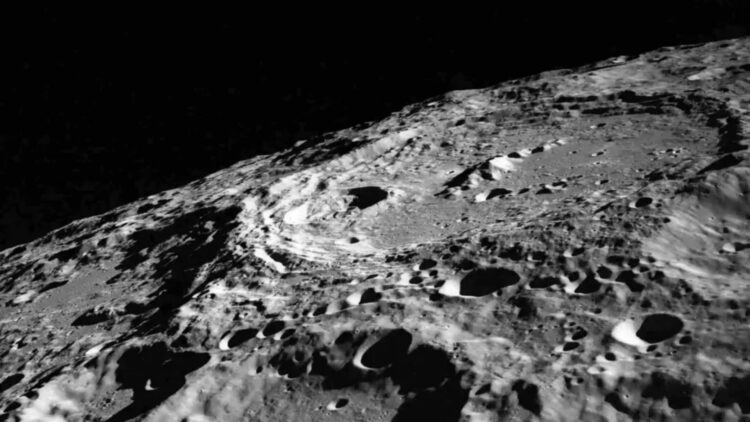
Despite Trump’s cuts to NASA’s funding, it continues to launch increasingly ambitious projects. The latest announcement has been its intention to build and install the first nuclear reactor, no less, on the lunar surface. This project aims to consolidate leadership in the face of strong competition from China and Russia. Its intention is to award two contracts for the development of surface fission power systems (FSP). With a power of 100 kilowatts, it is estimated that it could supply 80 terrestrial homes and will allow for the operation of a lunar base even during the cold lunar nights.
This project has been driven by Sean Duffy, the current acting administrator of NASA and Secretary of Transportation. Already in 2022, $5 million were invested in private industries for the design of lunar nuclear reactors, and now the aim is to double the initial energy capacity. Furthermore, in 2030, it is intended to retire the International Space Station (ISS), proposing international collaboration for future space stations. Duffy stated that the United States is in a race to the Moon against China, and they fear that they will arrive first and impose exclusion zones and limited access.
Nuclear reactor on the Moon
The projects proposed by NASA are becoming increasingly ambitious, which makes me wonder how they manage after the funding cuts from the Trump administration. In order to continue preserving its leadership against the fierce competition posed by China and Russia, the United States aims to build and install the first nuclear reactor on the lunar surface before the end of this decade. NASA’s plan includes awarding two contracts for the development of a surface fission power system (FSP).
It is estimated that it will be capable of supplying power to 80 terrestrial homes with an output of 100 kilowatts, and also to keep the lunar base operational despite the frigid conditions of the nights. Why turn to nuclear energy? According to experts, solar energy is not sufficient to supply some regions of the planet.
Who is behind this initiative?
The person responsible for this initiative is the current acting administrator of NASA and Secretary of Transportation, Sean Duffy. The former Fox News host has revolutionized the agency, making decisions that were unexpected for an interim administrator. Following the announcement of the project, Duffy stated, “we are in a race to the Moon against China. […] “We have given orders to move forward. Let’s go”.
Spacial race
Both China and Russia have already announced their plans to establish a lunar base equipped with nuclear technology. This is why Washington feels the pressure and has green-lighted this project with such tight plans and deadlines. One of their fears is that their rivals might arrive first and establish restricted or limited access zones. In response to these threats, the U.S. government has reactivated its space budget to fund its global defense and space exploration strategy. In 2022, $5 million was invested in the design of lunar nuclear reactors to private industries. Currently, given the situation with Chinese and Russian competition, the aim is to double that budget and ensure that the project doesn’t extend beyond 5 years.
Within the project of nuclear solar reactors, other purposes of the station are also included, such as the withdrawal of the International Space Station (ISS) in 2030. In light of this situation, Duffy has declared his intention to form partnerships for the creation of future space stations, as long as the United States remains the dominant power on Earth.