
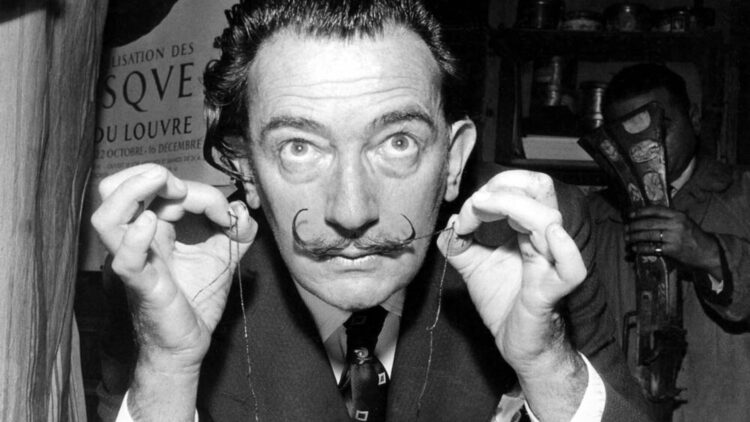
Has it ever happened to you that the more you search for a lost object, the longer it takes to find it? The same happens in the brain with problem-solving or tasks; the more we try, the fewer solutions we find. This is why science suggests that it’s better to take a step back, and even take a short nap. This practice was carried out by brilliant minds like Leonardo da Vinci, who took 20-minute naps every 4 hours, or Salvador Dalí, who would fall asleep with pencils in his hand so that when they fell, he would be woken at just the right moment.
A study from the University of Hamburg suggests that napping during N2 sleep (the early stage of sleep) is beneficial for achieving mental clarity, as published in PLOS Biology. A study was even conducted that demonstrated that those who took a 20-minute nap (during which their brain activity was monitored via EEG) achieved a higher success rate when it came to solving tasks. 85.7% took a nap of 15-20 minutes reaching N2 sleep, realizing the shortcut present in the tests, compared to the 63.6% who reached N1 sleep. The newspaper El Pais reported the statements of one of the researchers, Anika Löwe, who explained, “The result is a brain that is more plastic and receptive to new ideas”.
Delphine Oudiette, from the Paris Brain Institute, stated that science has not been able to explain what the exact region of the brain is that does the heavy lifting. However, she recommended, “If you want to use a micro-sleep in your life, it can help you with at least two types of creative tasks, even if you don’t know at what stage [of sleep] you are”.
The Nap of Geniuses
How many times have you found yourself stuck in front of the computer, facing a work problem, a creativity issue, or when trying to solve a problem? According to science, the best thing to do is to take a step back, even take a light nap. The benefits of this practice date back to brilliant minds like Leonardo da Vinci, who took 20-minute naps every 4 hours, or Salvador Dali, who took ‘micro-naps’ in a chair with pencils in his hand.
When he reached the brink of deep sleep, the pencils would fall from his hand, at just the right moment to wake up from the noise. According to PLOS Biology, a study from the University of Hamburg explains that briefly entering the early stage of sleep, known as N2 sleep, can be beneficial in these cases.
How is it explained?
A study has been conducted to try to understand how these micro-sleeps affect brain activity. With a sample of 90 people, they were asked to solve a series of tasks, but it was hidden from them that there was a shortcut. The results revealed the following: participants who took a 15-20 minute nap reaching N2 sleep accounted for 85.7% of those who discovered the shortcut, compared to 63.6% of those who only reached lighter sleep (N1), and 55.5% of those who remained awake.
Anika Löwe, the lead researcher, explained to the newspaper El País that N2 sleep helps the brain rest the information and detect patterns that had not been identified prior to sleep. “The result is a more plastic and receptive brain to new ideas”, she said.
Conclusions
Delphine Oudiette, a researcher at the Paris Brain Institute, explains that it is still unknown which specific part of the brain is responsible for the heaviest part. “It is a challenge for specialists to uncover the neural processes involved,” she told El País. However, it can be said that “If you want to use a micro-nap in your life, it can help you in at least two types of creative tasks, even if you don’t know at which stage [of sleep] you are.”