
Current technological advances have enabled experts to have numerous tools that allow the prediction of volcanic eruptions, such as the study of seismic data, ground and field sensors, or NASA satellites. However, these measures are not always entirely reliable, as, for example, satellites can have their activity affected by clouds or rain. In this scenario, NASA researchers have proposed another prevention method. Thanks to satellite observation, they have concluded that changes in the color of tree leaves could be a tool for preventing volcanic eruptions.
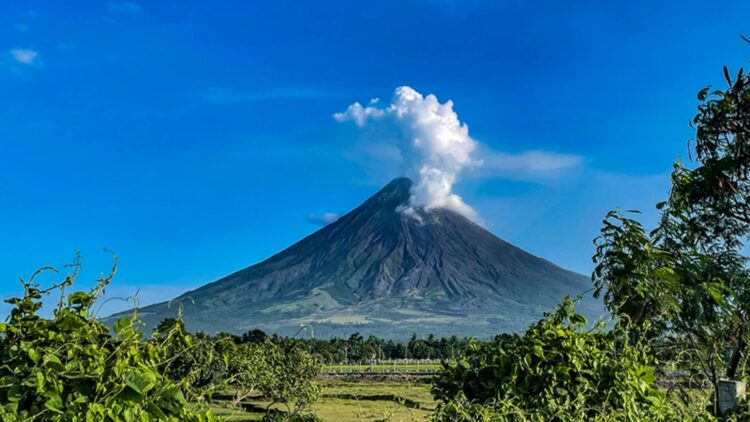
According to experts, when a volcano reaches its nearly eruptive phase, it begins to release magma, which contains high levels of carbon dioxide. Through the Normalized Difference Vegetation Index (NDVI), it has been shown that high doses of carbon dioxide cause trees to grow faster and become greener than usual. This is the case with Mount Mayon in the Philippines. In 2017, the increase in carbon dioxide levels was detected, which led to the evacuation of residents. In 2018, the volcano erupted, which did not cause any human casualties thanks to the prediction.
Volcanic eruption prevention
So far, researchers have used different methods to predict volcanic eruptions, which have been refined thanks to technological advances. These range from seismic data studies, ground and field sensors, to satellite imagery. The latter is made possible by the work of NASA researchers, who are able to capture and track ground deformations or swellings when alterations in sulfur levels are detected. However, this type of method has its limitations. In the case of satellites, their activity can be limited by clouds or storms, while seismic detectors can become faulty.
New prevention methods
In this scenario, NASA researchers have focused on another prevention method that originates from trees. This arose from the discovery of 16 color patterns in trees that varied depending on the movement of underground magma. Experts explain that when a volcano becomes active and approaches its near-eruption phase, it begins to release magma, which contains large amounts of carbon dioxide. The presence of this element causes the trees to grow and become greener than usual.
Normalized Difference Vegetation Index (NDVI)
To measure the different levels, the Normalized Difference Vegetation Index (NDVI) has been used. Thanks to satellite images, it has served as an early warning for a volcanic eruption, allowing researchers to reduce the time that other prevention methods required, and it is also more reliable.
Mayon Volcano in the Philippines
One example of the use of this type of preventive measures took place in 2017, when researchers discovered an increase in carbon dioxide levels around Mayon volcano in the Philippines. Thanks to this prevention, more than 56,000 people were evacuated when the volcano erupted in 2018, resulting in zero human casualties.
Uses for the future
If trees have been on the face of the Earth for as long as science can count, why not make use of the wisdom they offer us? NASA scientists are taking advantage of this undeniable asset to launch studies that could shed light on the existence of links between trees, not only with the prediction of volcanic eruptions but also with other natural phenomena such as earthquakes, underground chemical disturbances, and climate-induced stress. The indisputable consequences we are experiencing as a result of climate change also require new perspectives, and this approach could be a starting point for volcanologists and researchers.