
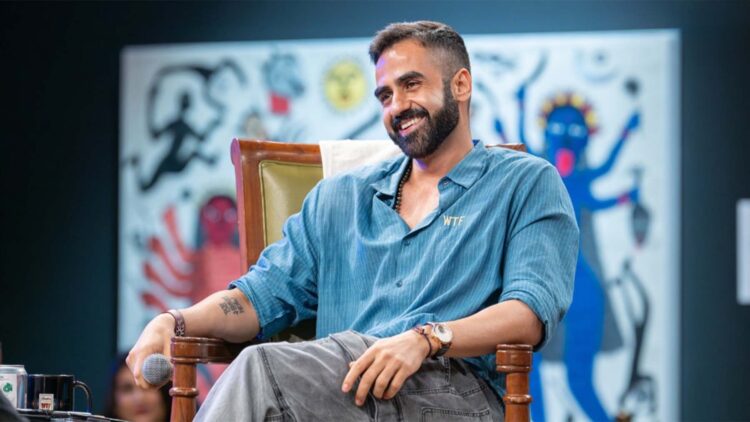
We usually look for advice from people with a lot of experience, from bosses or wise older references, especially if we are thinking about building a career or starting a business, right? But the self-made multimillionaire Nikhil Kamath, co-founder of Zerodha, suggest exactly the opposite. In a conversation with Ryan Roslansky, he said: “Don’t go to the previous generation to figure out what you should be doing 20 years from now.” His idea is that if you want to know where the future is going, you cannot just look to the past; you have to also look at young people who are actually building it.
Kamath, started selling phones to his friends when he was in 9th grade, he quit school, worked in a call center and learned to invest in the stock market on his own in his spare time. In 2010 he cofounded Zerodha along with his brother, and the platform need up with more than 10 millions of users and a multimillion fortune for him. Later, he co-founded Gruhas, a venture capital firm that invests in artificial intelligence and clean technologies, sectors closely linked to the concerns of the young generations.
Why look at what young people do
For Kamath, new business ideas often are born when you ask yourself what young people are doing and what will they want in a few years from now. “Go look at what the kids are doing. Go look at what a 16-year-old boy is doing [and] what he might want in 10 years.” He said. Why? Well, today’s teenage will be the main consumers, workers and cultural creators tomorrow. And if you understand their habits, likes and dislikes, and problems, you have the advantage to create products or services that fit them in the future.
He also warns that “a lot of the advice you might get from someone who’s 50 or 60 and in positions of power” can be disconnected from what younger users really need because their references come from other times, with other technologies and ways to consume. But it doesn’t mean that older people have nothing to contribute anymore; in fact, their experience in things like discipline, risks or strategy can be really, really valuable.
For Kamath, young people “define culture going forward.”
What do the digital habits of the new generations tell us?
Nearly half of teenagers are connected “almost constantly,” according to Pew Research Center’s 2024 Teens, Social Media and Technology report, especially in platforms like YouTube, TikTok, Instagram and Snapchat. And from there, trends start: dance, fashion, lifestyle, even how you talk and give your opinion about politics or mental health.
CEO Mark McCrindle told CFO Brew in May that “every organization, every brand, every product is just one generation away from extinction,” which means that, it only takes a new generation to stop feeling identified with something for that “something” to disappear.
For an entrepreneur, this is like having a window to the future of the market; seeing which formats get the attention, which topics go viral and what kind of content makes people interact. Facebook was born because university students wanted to relate to each other; Pinterest was inspired by its founder’s passion for collecting things since childhood. They were not very complicated ideas, but observations well connected with real behavior.
Look forward, not back
Kamath doesn’t say that you have to stop listening to older people or those who have already been successful; it’s still very important to learn from their mistakes, how to overcome crises or how they handle the pressure.
But he insists, that if you really want to know if your idea has a future, you better ask someone younger, like a teenager, a university student, to an audience that will be there in 10 or 20 years.