
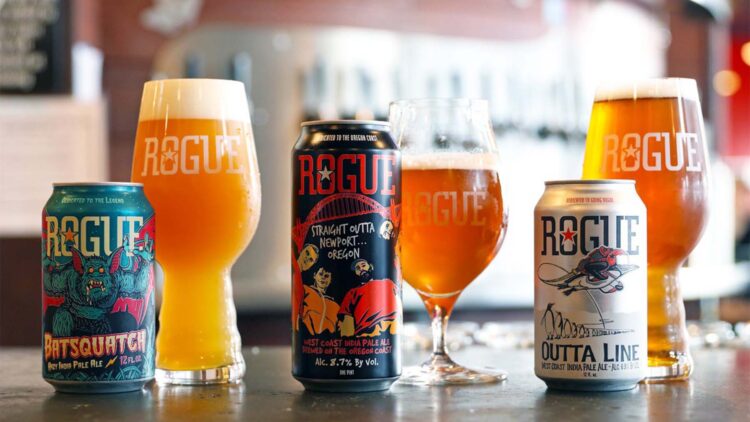
If you are an Oregon beer lover, you’re probably familiar with Rogue Ales & Spirits. For many years, the business was known for having places where people met, got drinks, and created memories. That’s why for many, it was a shock to learn that the company had filed for Chapter 7 bankruptcy and closed its restaurants and brewery.
Rogue listed approximately $5.6 million in assets and $19.6 million in debts in the federal court filing. The complaint focused on four pubs in Astoria, West Salem, and Southeast Portland, and 47 jobs that vanished practically instantly. A company begins liquidating its assets under Chapter 7 in order to settle its debts. Which, usually means selling off equipment, furnishings, and other assets, and indicates the business will close rather than try to recover.
The shutdown became a harsh reality—for the company and the employees—on November 14, when the brewery abruptly had to suspend operations.
What the bankruptcy means for Rogue Ales & Spirits
Rogue reported $5.6 million in revenues against $19.6 million in debts, according to the court papers. As a result, they filed for Chapter 7 bankruptcy, and the corporation had to fully shut down and sell all of its assets.
Four Rogue bars in Astoria, West Salem, and Southeast Portland are the target of the lawsuit. Because of the shutdown, 47 employees have lost their job. Before the bankruptcy declaration, Rogue had already closed its distillery, and half of that 4,800-square-foot structure has now been re-leased to a seafood processor. Another tenant is being found to take up the remaining area.
The problems didn’t just sudently appear overnight; Rogue had already closed a facility in north Portland and another spot near Portland State University. The company owes the Port of Newport $594,000 in rent, Lincoln County $511,000 in taxes, and an additional $66,000 in federal alcohol taxes, according to court papers. All of those figures point to a company that is struggling financially, particularly in the wake of the epidemic that affected eateries, pubs, and brewers nationwide.
“There was no warning”–How staff found out
For many employees, the shutdown was sudden and shocking; Carinna Stanton, a manager at the Rogue bar in West Salem, described the scene to Oregon Live. She stated: “There was no warning, no heads up, just an announcement that said we were going to be paid until the end of today. They wished everyone well…two weeks before Thanksgiving.”
The abruptness of the closing is evident in her words. Being let go shortly before the holiday season meant people had very little time to change or find other jobs.
How customers are reacting: “It was an institution”
The news about Rogue’s shutdown provoked strong emotions online. On Reddit, one longtime client wrote: “Man, this sucks. It was the highlight of going to the coast for me. Take the kiddo to the aquarium, lunch at Rogue. What a bummer.” For him—and many other clients—that place was more than just a brand; it was a part of a routine, a family ritual.
Another statement captured how essential the brewery felt in its communities: “Regardless of what you thought of the beer, it was an institution. It’s going to leave a hole in the communities.”
However, Rogue’s story fits with a bigger trend. In the years after the COVID-19 pandemic, many companies and chains had to face difficulties; well-known businesses and restaurant chains have either closed their sites or filed for bankruptcy.
Stories like Carinna’s highlight that a bankruptcy is not just about numbers. It’s also about workers who suddenly lose their income, regular customers who lose a favorite spot, and communities that lose a familiar gathering place. For them, the impact is already very, very real.