
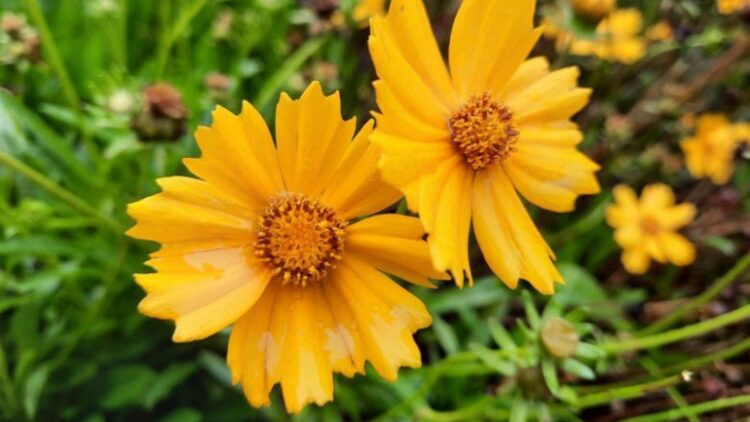
If you are someone who likes to have a colorful garden, well-cared-for, and with a variety of plants, this article is for you. One of the most popular options for those who want a beautiful garden without putting in too much effort is to choose self-seeding plants. These are plants that drop their own seeds before dying, which ensures that they will germinate by themselves the following year. Moreover, they play an essential role for pollinators, as they are among the first to bloom, providing pollen and nectar for birds, butterflies, and other animals.
They are perfect for those who cannot or do not want to dedicate much time to garden care, as they are known for being low maintenance. Some of the most well-known are Alyssum, Amaranth, Bee Balm, Black-eyed Susan, Borage, Calendula, California Poppy, Columbine, Cosmos, or Hellebore. These are some examples of species of these types of perennial and annual flowers, which usually adorn our gardens with minimal upkeep.
Self-seed planting
A beautiful garden, with a variety of plants and colors, requires an effort that not everyone can or is willing to make. That is why if you are among those who like to have plants but do not want to spend too much time on their maintenance (like me), the perfect choice is self-seeding flowering plants. These are plants that drop their seeds before dying, ensuring that they will germinate again the following year. Their appeal lies in the little maintenance they require, nothing much beyond the environmental conditions. Moreover, these plants bloom earlier than others, which also makes them attractive to pollinators, as they are an early source of pollen.
Different types
There are many types of plants to choose from for our garden, so let’s review the most selected ones.
Alyssum (Lobularia maritima)
According to the horticulturist from Eden Brothers, “Alyssum regularly makes its home in patios, gardens, and residential landscapes where it invites much-needed pollinators.” They require well-drained soil and partial to full sun.
Amaranth
The ornamental products manager at Harris Seeds and a member of the National Garden Bureau, Miya Sohoza, explains that “Amaranth is one of the most prolific self-seeding plants I have grown.” They require well-drained soil and partial to full sun
Bee balm (Monarda didyma)
It is a wildflower native to North America. According to the owner of Flowers Contained, “If you don’t want your bee balm to self-seed, it can easily be diluted out.” They require well-drained soil and partial to full sun.
Borage (Borago officinalis)
According to horticulturist and marketing director for the National Garden Bureau Gail Pabst, “Borage is a great pick for gardens with challenging soil”. Partial to full sun; well-draining soil.
Calendula
Sohoza says “Often grown for its edible petals and homeopathic uses, calendula is a hardy annual that will self-seed if given the room in the garden to do so”. Partial to full sun; well-draining soil.
California Poppy
It is considered to be majestic and elegant. Full sun; well-draining soil.
Columbine
According to Ketchmark, “It’s always a surprise to see where columbine will pop up in the spring”. Partial to full shade; well-draining soil.
Cosmos
“An incredibly colorful flower that is both hardy and beautiful, cosmos are a versatile variety that can thrive in just about any climate and any soil condition,” says Hayek. Full sun; well-draining soil.
Hellebore
Hayek explains “The seeds on Hellebore are so big that they easily fall out and add new plants around the first plant”. Full sun to full shade; moist, well-drained soil.
Purple Giant Hyssop
Zeeb says “With beautiful purple flowers, the seedlings carpet the ground around parent plants and grow out in the fall”. Full sun; well-drained soil.
Love-in-a-Mist
“The spent flowers transform into unique, egg-shaped seed capsules, perfect for drying in bouquets,” Pabst explained. Partial to full sun; well-drained soil.
Purpletop Vervain
“It can grow under a wide range of conditions and thrives as a self-seeding plan”, said Sohoza. Full sun; well-drained soil.
Snapdragon
Zeeb explained that “If you can tempt yourself not to cut any blooms, let the flowers go to seed to find new plants in the fall”. Partial to full sun; well-drained soil.
Spider flower
“While not fragrant, these beauties attract butterflies and hummingbirds to the garden”, stated Pabst. Partial to full sun; well-drained soil.
Tickseed
“If left to self-seed, flowers will be finished by the end of summer and reborn again during next year’s spring,” says Zeeb. Full sun; well-drained soil.
Viola
Violas enjoy the cold stratification that winter brings and will provide you with an early and hardy garden,” Sohozo says. Partial to full sun; well-drained soil.
Zinnia
“Then, enjoy them for years to come as they are heavy re-seeders, especially prolific in the warmer zones”, says Hayek. Full sun; well-drained soil.