
An underwater data center is a computing server facility installed in sealed capsules under the sea with the goal of cooling faster and using fewer energy resources. This is one of the practices carried out by the Chinese company Highlander Digital Technology with the aim of generating energy for nearby offshore wind farms, making its energy source 95% renewable. Its ultimate intention is for this facility to serve companies like China Telecom, an artificial intelligence computing company, as well as being an initiative of the Chinese government itself in favor of energy efficiency more oriented toward green technology.
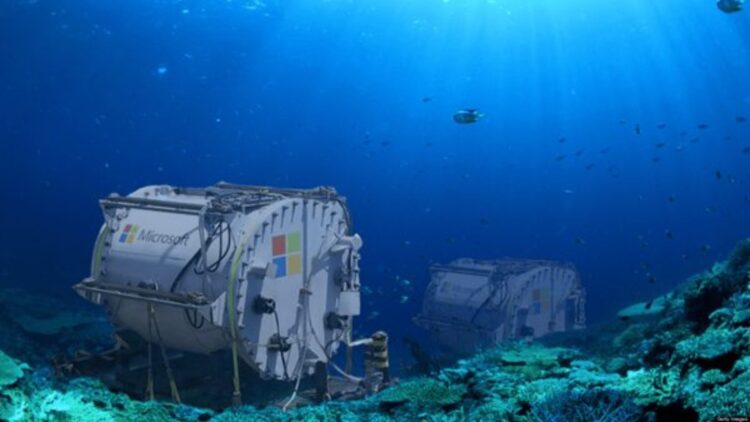
This type of technology was already used by Microsoft between 2015 and 2020 with Project Natick, which was first developed in California and later off the Orkney Islands in Scotland. Additionally, other companies such as Subsea Cloud have also offered this technology to their clients, providing guarantees of emission reduction. Another alternative to submerging data centers is to keep them floating, as Nautilos Data Technologies did before focusing on the EcoCore line of AI infrastructure. Meanwhile, the Japanese shipping company Mitsui OSK Lines (MOL) plans to have a ship operating as a floating data center by 2027.
Underwater data center
An underwater data center is a computing and storage infrastructure housed in sealed containers under the sea. The utility of this technology is to use water as a natural and free cooling agent for the servers, in addition to being a source of renewable energy by making use of ocean currents for more efficient and sustainable operation. According to Highlander’s Vice President, Yang Ye, in his statements to the South China Morning Post, ‘underwater operations have inherent advantages.’ According to the data, this method produces a 90% savings in energy consumption compared to on land, and it is estimated that 95% of the energy used at each facility comes from renewable energy sources.
Beijing Highlander Digital Technology Co.
It is a Chinese company based in Beijing, specialized in maritime communication systems and naval automation. It has recently gained attention for having developed commercial underwater data centers, aimed at making the most of the energy from offshore wind farms. Highlander Digital Technology refers to the second commercial underwater data center installed in the Hainan region, having installed the first one in the port of Zhuhai in Guangdong in 2021. It has now been made public that they intend to immerse their last marine barnacle pods, in order to serve clients such as China Telecom and a state-owned artificial intelligence (AI) computing company.
A technology with precedents: Microsoft
This is not the first time this type of technology has been proposed. Between 2015 and 2020, the company Microsoft conducted trials with Project Natick, but it did not advance much further. The results were very promising: with installations in California and later on the Orkney Islands in Scotland, they reported that the server failure rate was 1/8. However, they never explained why, but it is believed to have to do with the difficulty of updating databases at the same speed as technology does outside the water, especially given the pace at which AI is advancing.
For its part, Subsea Cloud has indeed invested in this type of technology, offering its clients the opportunity to try out its facilities in Norway for a period of 90 days. The company guarantees a 40% reduction in carbon emissions, a 30% reduction in operating expenses, and zero cost for cooling.
Alternatives to submerged bases: floating databases
Other companies have opted for the direct alternative: why submerge the database if it can stay afloat? Google explored this idea a decade ago, but it was Nautilus Data Technologies that put it into practice, with installations in California, France, before focusing on the EcoCore line of AI infrastructure. Additionally, it is expected that by 2027 the Japanese shipping company Mitsui OSK Lines (MOL) will be operational, transformed into a floating data center to respond to changing demand.