
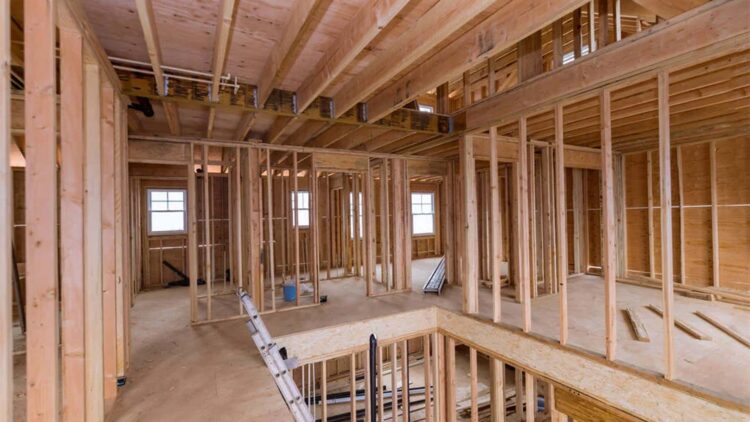
When we think about houses in the United States, the image that comes to mind is the typical wooden house—Wisteria Lane style—with the front yard and maybe even a little cozy balcony with a wooden fence. It is indeed what you can see in most of the country, while in other places like Spain, to spot a house like that would be actually rare.
In Europe, construction is mostly associated with brick, cement or concrete, and seeing a wooden house seems almost exotic. However, in the States, the reason behind the way the do their houses is not just about aesthetics, it have historical, economic and practical reasons.
Origins and availability of the material
Using wood in American constructions comes all they way back to when the first European settlers—especially the British—who arrived in North America between the late 16th and early 17th centuries. They found themselves in a huge territory and they needed to build up shelters in a very short time. Wood was the most logical option then; it could be cut and transported quite easily, and worked wit simple tools. Building with brick or stones back then, would have been much more long and complex.
The first houses where mostly for survival, and overtime, it became a habit, and then, an identity.
It was also about availability, in the U.S. there are large forests where tree felling is carried out for industrial and construction use, which makes it an abundant resource. It’s also cheaper than other building alternatives.
Economy, mobility and taxes
In many areas of the United States, building a wooden house is cheaper than building it with the combination of brick and cement or concrete that is often used in Europe.
Several American studies show that many people change homes many times throughout their lives—moving up to five times. And for someone who moves so many times, it makes sense to look for a house that can be built quickly and affordable.
Then there’s the taxes subject: Depending on the State where it is built, the taxes associated with a wooden house may be lower than those of a house built with cement and brick.
Safety and simplicity in the construction
Another good thing of the American model is the possibility of “self-construction.” In the United States market there are numerous kits that allow a person with good manual skills to raise their own wooden house. This kits usually come with the basic material and instructions you need to build-up your own home.
In only a few months you can have a new home, for way cheaper than a conventional way. But you do have to have some knowledge about constructions, it’s not another DIY project, it has foundations, wall, and wiring that need to be done carefully if you want the house to work and last. However, the idea is much doable that if it was a brick house.
Wood is a more flexible material too. Which can help to better resist certain terrain movements, like low-intensity earthquakes or strong winds of light tornadoes. It’s not indestructible, of course, but it absorbs what some rigid structures cannot. In areas with more tornados or hurricanes risks, houses often have a brick or cement basement where to shelter. And if the upper part is damaged, repairing or rebuilding a wooden house is usually cheaper and faster.
Wooden houses in the United States are not just an aesthetic issue or a passing trend. They are the result of a combination of history, available resources, costs, population mobility and characteristics of the material itself.