
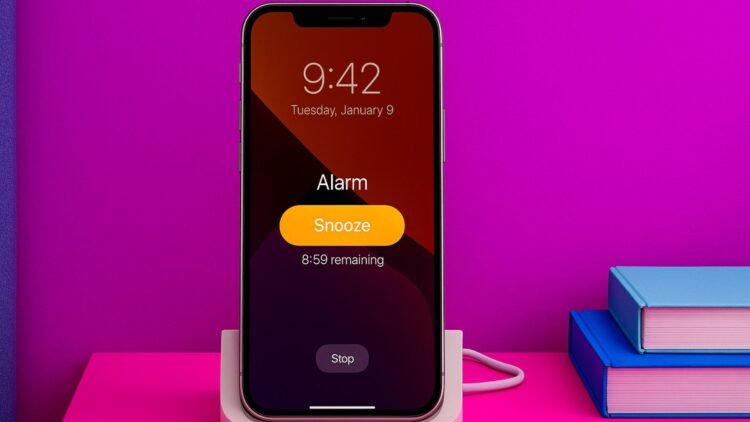
Waking up in the mornings is not an easy task, and some people find it harder than others. Although it may seem silly, researchers have conducted sleep experiments that have revealed that not all alarms wake you up in the same way, and not all are beneficial. For this reason, they have studied iPhone tones and have determined which ones stand out as allies against sleep inertia.
Melodic alarms are the best option, as they reduce confusion and improve alertness. On the other hand, dry and repetitive sounds tend to make the process more overwhelming and harsh. The tone that, according to scientific literature, is most suitable is “Sencha,” chosen for being a recognizable melody, having a moderate pace, and lacking jarring peaks. Other tones such as “By the Seaside” or “Uplift” would also be valid. The idea is to choose a tone that is more melodic and does not sound like an emergency alarm.
Importance of choosing a good alarm tone
Waking up in the morning isn’t easy, and neither is choosing the right alarm. Some people opt for shrill, siren-like sounds that, after going off, leave you not knowing where you are or who you are. Others choose more melodic tones or even songs to start the day. In response to this dilemma, sleep experts have conducted research studying what type of alarm is most advisable to use.
They have determined that not all alarms wake you up the same way, and while some stun you, others clear your mind. One study used different iPhone alarm tones as material, from which it was determined which would be the best choice. Before this study, the most cited research on wake-up sounds had already established the basics: melodic alarms are better, as they improve attention and reduce confusion upon waking, while repetitive, harsh, and dry sounds tend to make the waking process more difficult and heavy. In the tests that were carried out, users described that song-like tones helped them with mental speed and less disorientation.
“Sencha” Tone
Among the native iPhone tones, the one chosen based on expert analysis results was Sencha, which is characterized by:
1) Recognizable melody, capable of engaging the brain without startling it.
2) Moderate tempo, enough to activate without causing immediate stress.
3) Absence of sharp peaks, which prevents an extreme alarm reaction.
With these characteristics, the brain gradually wakes up, unlike high-pitched and piercing sounds that cause a sudden awakening. According to the study results, those who used this alarm reported feeling less of a “heavy head” and greater mental clarity in the first minutes of the day. Tones such as “By the Seaside” and “Uplift” were also considered viable.
Which ones are not recommended by experts?
Tones like “Radar” or “Signal” are very harsh and high-pitched, so they do not have a good effect on waking up. “Presto,” “Beacon,” and “Chimes” are also not recommended. These sounds share the following characteristics:
- They are very high-pitched, capable of immediately triggering alert mechanisms.
- They have a repetitive, non-melodic pattern, which makes them more invasive.
- They produce a sudden entrance, almost without progression.
Sleep science explains that this type of tone causes stress and a physiological impact that can lead to:
- A sudden increase in heart rate.
- Startle response.
- Irritability.
- Mental fog.
The alarm is not enough
Although science supports the benefits of using certain alarm tones, it is important to maintain good sleep hygiene so that rest is restorative and mornings are not so costly. You should take into account aspects such as:
- Keeping regular sleep schedules.
- Not using screens or reducing their use before going to bed.
- Having a dark and cool bedroom.
- Avoiding heavy dinners and intense stimuli before going to bed.